
Real estate investing sounds simple from a distance. Buy property, collect rent, and wait for its value to rise.
The reality is less tidy. A rental can appear profitable until vacancy, insurance, taxes, repairs, and financing are included. A house flip can lose its margin through contractor delays, while publicly traded real estate investments can fall when markets weaken.
You do not need to become a full-time landlord. You can own a rental, house hack, buy REITs, renovate homes, or use professionally managed private deals. Each route requires different amounts of cash, time, skill, and risk tolerance.
The right choice starts with honest questions. How much can you invest without touching your emergency fund? Do you want monthly income, long-term appreciation, or both? Are you comfortable managing tenants and contractors, or would you rather own real estate through a brokerage account?
There is no completely passive, risk-free route. Even professionally managed investments require research. The aim is to choose a method that fits your finances before committing money to a property, fund, or private deal.
Below are the first four of five practical ways to invest in real estate, including the calculations that reveal whether an opportunity is genuinely profitable.
Start by Choosing Your Real Estate Strategy
Do not begin with a property listing. Begin with the role you want real estate to play in your financial plan.
Direct property can provide income and potential appreciation, but it concentrates money in one location. A publicly traded real estate fund is easier to buy and sell, although its price moves with the market.
Compare the commitment behind each method
Evaluate each opportunity using these questions:
- Starting capital: How much cash is required for the down payment, closing costs, repairs, and reserves?
- Time commitment: Will you screen tenants, supervise renovations, or simply review financial reports?
- Liquidity: How quickly could you convert the investment back into cash?
- Loss capacity: Could you handle six months without rent or a 25% fall in market value?
Suppose you have $30,000. Using all of it as a down payment leaves no cash for vacancy or repairs. A safer plan may invest $20,000 and retain $10,000 as a reserve.
Why it matters: Real estate problems rarely arrive according to your spreadsheet. The investment should survive a bad month without forcing you to borrow at a high interest rate.
1. Buy a Long-Term Rental Property

A long-term rental can produce income, loan repayment, and potential appreciation. The mistake is treating rent as profit.
Calculate net operating income first
Assume a property costs $240,000 and rents for $2,200 per month. Your estimated monthly operating costs are:
- Vacancy reserve: $110
- Property taxes: $250
- Insurance: $120
- Repairs and maintenance: $180
- Property management: $176
Net operating income before financing is:
$2,200 − $110 − $250 − $120 − $180 − $176 = $1,364 per month
Annual net operating income is $16,368.
The capitalization rate, commonly called the cap rate, is:
$16,368 ÷ $240,000 = 6.82%
Now assume a $60,000 down payment and a $180,000, 30-year mortgage costing approximately $1,167 per month in principal and interest. Estimated monthly cash flow becomes:
$1,364 − $1,167 = $197
If total cash invested, including closing costs and initial repairs, is $68,000, the annual cash-on-cash return is approximately:
$2,364 ÷ $68,000 = 3.48%
That is very different from assuming the property earns $2,200 per month.
Include taxes without buying only for a deduction
Rental income is taxable, while qualifying operating expenses and depreciation may be deductible. Residential rental buildings are generally depreciated over 27.5 years under the standard federal system. Land cannot be depreciated, and passive-activity rules may limit how rental losses are used.
Suppose the building portion of the property’s tax basis is $200,000. A simplified full-year depreciation estimate would be:
$200,000 ÷ 27.5 = approximately $7,273 per year
That deduction may reduce taxable rental income, but depreciation is not free money. It can affect the tax calculation when the property is eventually sold.
Inspect the tenant economics, not only the building
Check rents, vacancy, insurance, post-purchase taxes, landlord rules, and major systems such as the roof, HVAC, plumbing, and foundation.
A property with an attractive kitchen but weak rental demand is not a strong investment. Neither is a high-rent property that requires constant repairs and expensive insurance.
Why it matters: Appreciation is helpful, but it should not be the excuse for buying a property that loses money every month.
2. House Hack a Two-to-Four-Unit Property
House hacking means living in part of a property while renting another unit. It can reduce housing costs while giving you landlord experience.
An FHA-insured loan may allow a down payment as low as 3.5% on an eligible one-to-four-unit property. The property must serve as the borrower’s principal residence, and normal income, credit, appraisal, and lender qualification requirements still apply.
Run the numbers as both a homeowner and landlord
Suppose you buy a duplex for $400,000:
- Down payment at 3.5%: $14,000
- Estimated closing costs and reserves: $18,000
- Total monthly payment, including mortgage insurance, property taxes, and homeowners insurance: $3,200
- Rent from the second unit: $1,700
Your effective housing cost becomes approximately:
$3,200 − $1,700 = $1,500 per month
That excludes repairs, vacancy, and owner-paid utilities. Reserve part of the rent instead of spending every dollar.
If the rented unit remains vacant for two months, you would need to cover the entire $3,200 payment yourself. That is why the emergency reserve matters even when the property appears affordable during full occupancy.
For three-and four-unit FHA properties, additional self-sufficiency and rental-income underwriting requirements may apply.
Understand the lifestyle cost
Your tenant may live next door or directly above you. Maintenance calls will feel personal. Local lease, deposit, occupancy, privacy, and fair-housing rules still apply even though you live in the building.
Why it matters: House hacking can lower the cash barrier to direct ownership, but it is not free housing. It is a home and a small rental business operating at the same address.
3. Buy Publicly Traded REITs

A real estate investment trust, or REIT, owns, operates, or finances income-producing real estate. Publicly traded REITs can be purchased through a brokerage account in much the same way as stocks.
This provides real estate exposure without a mortgage, tenant screening, or repair fund.
REITs may focus on:
- Apartments
- Warehouses and logistics centers
- Data centers
- Healthcare facilities
- Shopping centers
- Hotels
- Cell towers
- Mortgage-backed real estate debt
To qualify under federal REIT rules, a REIT generally must distribute at least 90% of its taxable income to shareholders. This can support regular dividend payments, although distributions and share prices are never guaranteed.
Compare a single REIT with a REIT fund
Suppose you invest $5,000 in a publicly traded REIT:
- A 5% annual dividend yield would provide $250 before taxes, assuming the distribution remains unchanged.
- A 15% share-price decline would reduce the market value by $750.
- Your total result would remain negative despite receiving dividends.
A single apartment REIT depends heavily on one property sector and management team. A broad REIT exchange-traded fund can spread exposure across several companies and property types, though market risk remains.
Do not choose a REIT solely because it advertises the highest dividend yield. An unusually high yield may reflect a falling share price, weak finances, or expectations that the dividend could be reduced.
Why it matters: REITs are accessible and liquid, but they are not savings accounts. Review debt levels, property concentration, management quality, fund fees, and dividend sustainability.
4. Buy, Renovate, and Resell Property
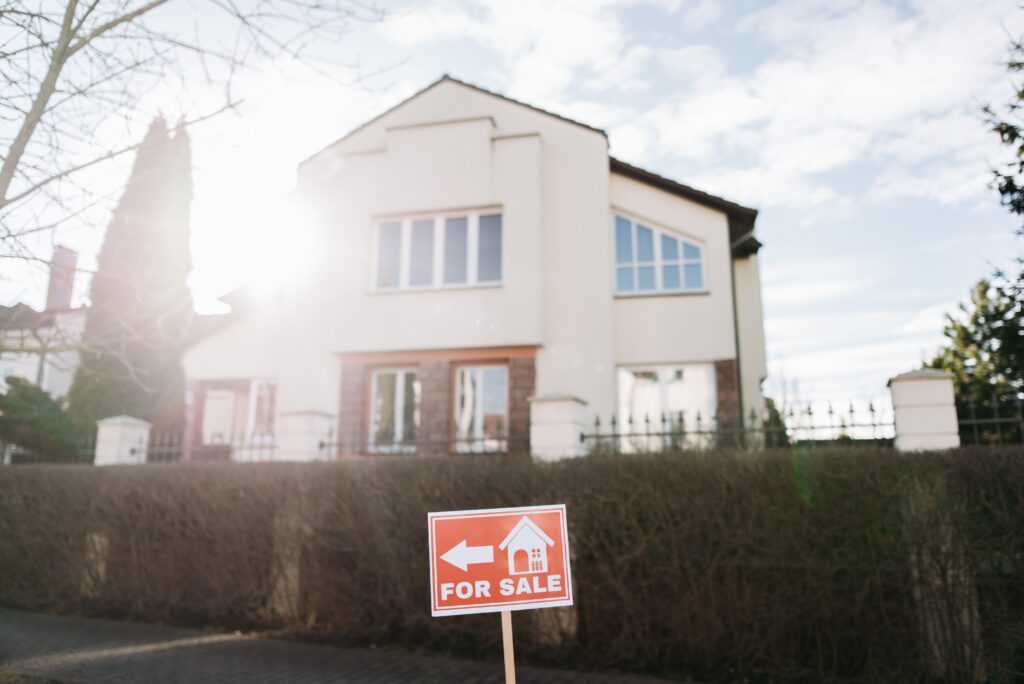
House flipping aims to create value through renovation and sell the property for more than the total acquisition, holding, and selling costs.
The purchase discount creates the margin. Paint alone rarely does.
Suppose a property has:
- Purchase price: $210,000
- Closing and financing costs: $12,000
- Renovation budget: $45,000
- Taxes, insurance, utilities, and interest during the project: $15,000
- Selling costs: $24,000
- Expected resale price: $330,000
Projected profit is:
$330,000 − $210,000 − $12,000 − $45,000 − $15,000 − $24,000 = $24,000
Now assume the renovation exceeds its budget by $15,000. Projected profit falls to only $9,000.
A lower selling price, additional financing month, foundation problem, or failed inspection could eliminate the remaining profit.
Work backward from a conservative resale value
Do not base the after-repair value on the most expensive listing in the neighborhood. Use recent completed sales of similar renovated properties.
Your budget should account for:
- Contractor labor
- Materials
- Permits and inspections
- Financing charges
- Property taxes
- Insurance
- Utilities
- Lawn and security costs
- Real estate commissions
- Seller closing costs
- A renovation contingency
Build the budget from contractor bids, permits, inspection findings, realistic holding time, and comparable sales. Include a contingency reserve.
Why it matters: Flipping is an active business with concentrated execution risk. The profit is earned when you buy at the right price, not when you choose attractive countertops.
5. Invest Through Real Estate Crowdfunding or a Private Syndication
Real estate crowdfunding allows several investors to pool money into a property, loan, fund, or development project. A private syndication follows a similar structure but is usually organized around a sponsor who finds the deal, arranges financing, manages the property, and eventually sells or refinances it.
You might invest in:
- An apartment complex
- A self-storage facility
- Industrial property
- A commercial development
- Short-term real estate debt
- A diversified private property fund
Some offerings are available to non-accredited investors under securities exemptions such as Regulation Crowdfunding. Others are private placements restricted mainly or entirely to accredited investors. Regulation Crowdfunding transactions must take place through a registered broker-dealer or funding portal, and non-accredited investors are subject to investment limits.
Understand the sponsor’s return structure
Suppose you invest $10,000 in an apartment syndication advertising:
- 7% preferred annual return
- Five-year expected holding period
- 70/30 profit split after the preferred return
- Targeted 14% internal rate of return
A preferred return is not guaranteed interest. It usually describes how available cash is distributed before the sponsor receives its share of certain profits.
If the property produces only $400 of distributable cash for your investment during the first year, you may receive 4%, not the advertised 7%. The remaining preferred return may accrue, depending on the operating agreement, but it still depends on future property performance.
Review every fee, including:
- Acquisition fee
- Asset-management fee
- Construction-management fee
- Refinancing fee
- Property-management fee
- Disposition fee
- Sponsor’s share of profits
Private placements may provide less information than registered public investments and can be speculative, difficult to sell, and capable of producing a total loss.
Why it matters
Crowdfunding may look passive, but your money can be locked up for years. You are relying heavily on the sponsor’s experience, honesty, financing decisions, and business plan.
6. Perform Due Diligence Before Committing Money
A strong property can become a weak investment when the price, debt, or management structure is wrong.
Before investing, review the property and the people controlling it.
Stress-test the numbers
Suppose an apartment property is expected to generate:
- Annual rent: $500,000
- Vacancy and unpaid rent: $25,000
- Operating expenses: $275,000
- Net operating income: $200,000
- Annual loan payments: $150,000
- Cash flow before major projects: $50,000
Now test a difficult year:
- Rent collected falls by 8%: minus $40,000
- Operating expenses rise by $20,000
- Cash flow falls from $50,000 to negative $10,000
The original projection may have looked comfortable, but a moderate decline in revenue combined with higher costs eliminated the entire cash cushion.
Check:
- Current and projected occupancy
- Local rent growth
- Property-tax reassessment risk
- Insurance availability and cost
- Deferred maintenance
- Loan interest rate and maturity date
- Balloon-payment or refinancing risk
- Sponsor experience with similar properties
- Pending litigation or regulatory problems
For private deals, read the offering memorandum and operating agreement. Confirm how investor votes work, whether additional capital can be requested, and what happens when an investor cannot meet a capital call.
Check the background and disciplinary history of investment professionals through official regulatory databases such as Investor.gov, IAPD, and FINRA BrokerCheck.
Why it matters
A projected return is an assumption. Due diligence shows how many things must go right for that assumption to become reality.
7. Control Leverage and Keep Adequate Cash Reserves

Borrowed money can increase returns when property values and income rise. It can also magnify losses.
Suppose you purchase a $300,000 rental with:
- Mortgage: $225,000
- Initial equity: $75,000
- Loan-to-value ratio: 75%
If the property value falls by 10% to $270,000, your equity becomes approximately:
$270,000 − $225,000 = $45,000
The property declined by 10%, but your equity declined by 40%, before selling costs.
Leverage also creates a fixed monthly obligation. The lender expects payment whether the property is occupied or vacant.
Build reserves around actual property risk
A reserve should cover more than one mortgage payment. Consider:
- Insurance deductibles
- Several months of loan payments
- Vacancy and tenant turnover
- Plumbing, electrical, and HVAC failures
- Legal and eviction expenses
- Large capital projects
- Special assessments for condominiums
A single-family rental with a $1,800 monthly payment and an aging HVAC system may reasonably need a larger reserve than a new property with warranties and stable tenants.
Do not count an unused credit card as your emergency fund. A lender can lower the limit, and borrowing for repairs adds interest to an already stressful situation.
Why it matters
Real estate investors rarely fail because a spreadsheet showed a small loss. They fail because they run out of liquid cash before the property recovers.
8. Plan the Exit Before You Buy
Every real estate investment needs an exit strategy.
Possible exits include:
- Selling the property
- Refinancing and retaining ownership
- Paying off the loan and keeping the income
- Converting an owner-occupied property into a full rental
- Exchanging into another investment property
- Receiving proceeds when a private sponsor sells the asset
Calculate the sale using net proceeds, not the expected selling price.
Suppose a rental is sold for $400,000:
- Mortgage payoff: $230,000
- Selling and closing costs: $28,000
- Repairs before sale: $7,000
- Net cash before taxes: $135,000
The taxable gain is not simply $400,000 minus $230,000. It depends on the property’s adjusted tax basis, improvements, selling costs, and depreciation claimed or allowable.
A properly structured Section 1031 exchange may postpone recognition of gain when qualifying business or investment real property is exchanged for like-kind real property. It defers tax rather than automatically eliminating it, and strict rules and deadlines apply.
Rental losses can also be restricted by passive-activity and at-risk rules, so tax benefits should not be assumed from a simple cash-flow calculation.
Why it matters
The purchase price determines the opening position. The exit determines how much profit you actually keep.
Comparative Analysis: Which Real Estate Strategy Fits You?
| Method | Typical capital need | Involvement | Liquidity | Main risk |
|---|---|---|---|---|
| Long-term rental | High | High | Low | Vacancy and repairs |
| House hacking | Moderate | High | Low | Tenant and housing overlap |
| Publicly traded REITs | Low | Low | High | Market volatility |
| House flipping | High | Very high | Low | Renovation and resale risk |
| Crowdfunding or syndication | Moderate | Low | Very low | Sponsor and execution risk |
A beginner wanting flexibility may prefer publicly traded REITs. Someone willing to manage tenants may prefer a rental or house hack. Flipping and private developments generally require stronger financial reserves and more specialized knowledge.
Common Mistakes to Avoid
- Using the full bank balance for a down payment
- Treating gross rent as monthly profit
- Assuming property values always rise
- Ignoring insurance, taxes, and major repairs
- Choosing a private deal from projected returns alone
- Underestimating selling costs
- Buying in a market you have not researched
- Expecting tax deductions to rescue a weak investment
Pro-Tips for Success
Calculate a downside case. Lower expected rent, increase expenses, and extend the vacancy period before investing.
Inspect the debt maturity. A profitable property can face trouble when a short-term loan must be refinanced at a higher rate.
Separate property finances. Use dedicated accounts and bookkeeping for direct investments.
Keep repair reserves liquid. Do not invest emergency money in another illiquid deal.
Start smaller than your maximum approval. Lender approval measures lending risk, not personal comfort.
Frequently Asked Questions
How much money do I need to invest in real estate?
Publicly traded REITs can be purchased with relatively small amounts. Direct properties usually require a down payment, closing costs, repairs, and cash reserves.
What is the easiest real estate investment for beginners?
A diversified publicly traded REIT fund is one of the simplest options because it does not require direct property management. It still carries market and real estate risk.
Can I invest in real estate with no money?
True no-money investing is rare. Even highly financed purchases require reserves, credit, closing costs, expertise, or a partner willing to contribute capital.
Is rental property better than REITs?
Rental property offers greater control and potential use of leverage. REITs provide liquidity and easier diversification. The better choice depends on available cash, time, and management interest.
Is real estate crowdfunding safe?
It is not guaranteed. Private and crowdfunding investments may be illiquid, speculative, and vulnerable to sponsor failure or property underperformance.
Do I need to be an accredited investor?
Not for every real estate investment. Some private offerings require accredited status, while certain crowdfunding offerings permit qualifying non-accredited investors subject to applicable limits.
What is a good cash-on-cash return?
There is no universal target. Compare the projected return with financing risk, property condition, local market, workload, and alternative investments.
Can real estate generate passive income?
REITs and professionally managed deals can require less day-to-day work. Direct rentals still require oversight even when a property manager is hired.
What happens if a rental property loses money?
You must cover the shortfall from reserves or other income. Tax deductions may be limited by passive-activity and at-risk rules.
Should I pay cash or use a mortgage?
Cash reduces financing risk and interest expense. A mortgage preserves capital and can increase returns on equity, but it also magnifies losses and creates fixed payments.
Conclusion
Real estate can build income and long-term wealth, but ownership alone does not make an investment profitable.
The numbers must work after vacancy, maintenance, financing, taxes, insurance, management, and selling costs. The strategy must also fit your available cash and willingness to manage problems.
Start with the level of involvement you can realistically handle. Then calculate the downside, not only the best-case return.
Final Verdict
For beginners, publicly traded REITs offer the lowest operational burden, while house hacking can provide an accessible route into direct ownership for qualified buyers.
Long-term rentals can create durable income when purchased at sensible prices. Flips and private deals may produce stronger returns, but they leave far less room for poor estimates or weak management.
The best real estate investment is not the property with the most exciting projection. It is the one that remains financially manageable when rent falls, repairs arrive, and the sale takes longer than expected.