
Getting a car loan is easy when the only goal is approval. Getting one with an affordable payment, reasonable interest rate, and manageable total cost takes more preparation.
That difference matters.
A dealer may show you a vehicle that fits your monthly budget by stretching the loan to 72 or 84 months. The payment looks comfortable. The total interest does not. Extra products may also be added to the amount financed, leaving you borrowing thousands more than the car’s advertised price.
The strongest buyers arrange financing before visiting the dealership. They know their credit position, calculate the maximum amount they can afford, compare offers from several lenders, and negotiate the vehicle price separately from the loan.
You do not need perfect credit or a massive down payment. You do need realistic numbers.
A lender will consider your credit history, income, existing debts, requested loan amount, down payment, loan term, and the type of vehicle you plan to buy. Your job is to present a stable application while protecting yourself from an expensive agreement.
Here is how to get a car loan without letting a low monthly payment hide the true cost.
1. Set Your Total Car Budget Before Applying

Do not begin with the question, “How large a loan can I get?”
Start with:
“How much car can I afford while still paying my other bills and saving money?”
The vehicle payment is only one part of ownership. Your monthly budget should also include:
- Auto insurance
- Fuel or charging
- Routine servicing
- Tires and repairs
- Registration and inspection
- Parking or tolls
- Property taxes where applicable
Suppose your budget allows $700 per month for transportation. Estimated non-loan costs are:
- Insurance: $180
- Fuel: $160
- Maintenance reserve: $75
- Registration and parking: $45
That leaves $240 for the loan payment, not $700.
Calculate the out-the-door price
The advertised vehicle price is not necessarily the amount you will finance.
Your out-the-door cost may include:
- Vehicle price
- Sales tax
- Title and registration fees
- Dealer documentation charges
- Optional add-ons
- Existing negative equity from a trade-in
Subtract your down payment, trade-in equity, and any cash rebate to estimate the amount financed. The CFPB recommends considering both upfront and ongoing costs rather than choosing a vehicle from the payment alone.
For example:
- Vehicle price: $25,000
- Taxes and required fees: $2,200
- Optional products: $1,500
- Total purchase cost: $28,700
- Down payment: $4,000
- Estimated amount financed: $24,700
Removing the $1,500 of optional products reduces the loan to $23,200. At 8% for 60 months, that decision would save more than the product’s sticker price because you would also avoid paying interest on it.
Why it matters
Dealers often discuss affordability through the monthly payment. A longer term can make an expensive car appear affordable without reducing its price.
Key takeaway: Set maximum figures for the out-the-door price, amount financed, and monthly payment before shopping.
2. Check Your Credit and Strengthen the Application
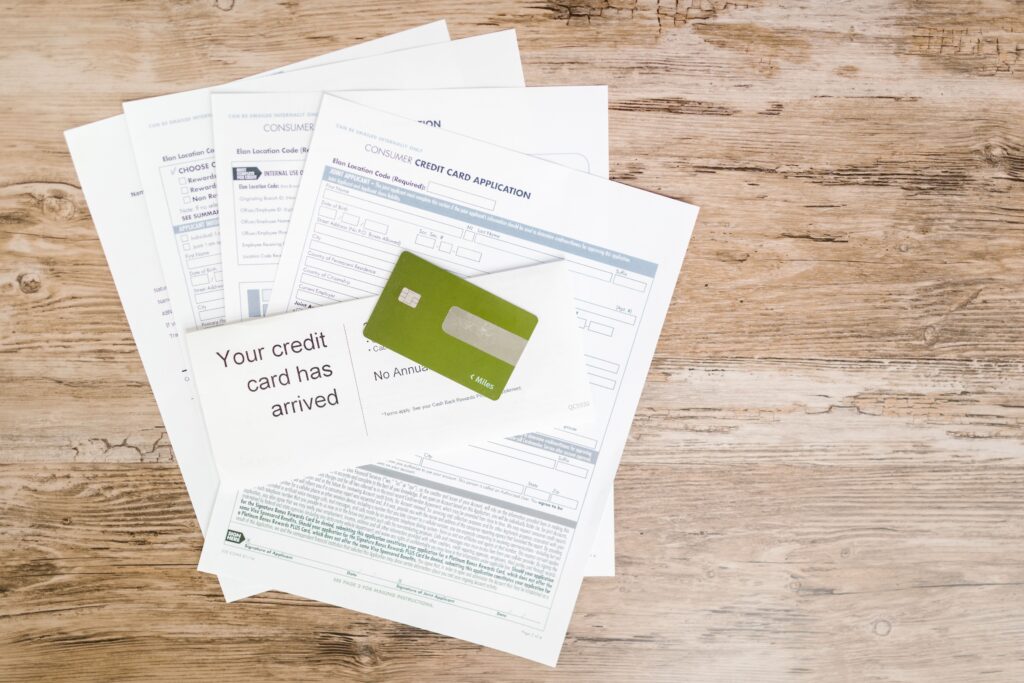
Your credit score is important, but lenders look beyond one number.
Auto lenders may consider:
- Credit scores and repayment history
- Monthly income
- Existing debt obligations
- Employment stability
- Loan amount
- Down payment
- Loan term
- Whether the vehicle is new or used
These factors help the lender estimate both your ability to repay and the risk attached to the vehicle serving as collateral.
Review your credit reports before the lender does
Check your reports from Equifax, Experian, and TransUnion for:
- Late payments that do not belong to you
- Incorrect balances
- Duplicate collection accounts
- Fraudulent accounts
- Outdated personal information
- Loans incorrectly shown as unpaid
A reporting mistake can affect the interest rate or approval amount. Dispute genuine errors before applying when possible.
Also reduce revolving credit card balances. Suppose you have $8,000 in total limits and report $6,000 in balances. That is 75% utilization. Paying the balance down to $2,000 reduces utilization to 25%, which presents a less strained credit profile.
Do not close old credit cards simply to “clean up” your report. Closing an account can reduce available revolving credit and increase utilization.
Prepare the application documents
A lender may ask for:
- Government-issued identification
- Social Security number
- Proof of residence
- Recent pay stubs
- Bank statements
- Employer details
- Tax returns for self-employed applicants
- Vehicle information
- Trade-in and existing loan details
Self-employed borrowers should be particularly careful. Gross business revenue is not the same as personal qualifying income. Have recent tax returns and supporting statements ready to explain cash flow.
Why it matters
A clean, complete application is easier to approve. It also reduces the risk of delays while a desirable vehicle is being sold to another buyer.
3. Get Preapproved Before Visiting the Dealership

You are not required to finance through the dealership. Banks, credit unions, online lenders, and finance companies may all offer auto loans. Getting offers before entering the showroom gives you a benchmark against which to compare dealer financing.
Start with at least three sources:
- Your current bank
- A local or national credit union
- An established online auto lender
A preapproval may tell you:
- Maximum loan amount
- Estimated APR
- Available loan terms
- Down payment requirement
- Vehicle age or mileage restrictions
- Expiration date of the offer
Complete your rate shopping within a focused period
Auto-loan applications normally involve hard credit inquiries. However, credit scoring models generally group multiple inquiries for the same type of loan when they occur within a rate-shopping window, commonly between 14 and 45 days.
Keeping your applications close together allows you to compare lenders without each inquiry necessarily being treated as an entirely separate credit-shopping event.
Do not stretch the process over several months. Gather documents first, then submit applications during a concentrated period.
Use the preapproval as negotiating leverage
Suppose your credit union offers:
- Loan amount: $28,000
- APR: 7.25%
- Term: 60 months
The dealer offers 8.75% for the same term.
You can ask:
“I already have approval at 7.25%. Can you beat that rate without changing the price or adding products?”
Dealers may be able to negotiate the rate, and the first offer is not necessarily the lowest rate for which you qualify.
Why it matters
Without a preapproval, you do not know whether the dealer’s financing is competitive. With one, the dealership must either improve the offer or explain why its loan costs more.
4. Choose the Down Payment and Loan Term Carefully

A larger down payment reduces the amount borrowed. It may also improve the loan-to-value ratio and help you qualify for better terms.
The loan-to-value ratio is:
Loan amount ÷ Vehicle value × 100
Suppose the vehicle is worth $30,000.
- Loan of $30,000: 100% LTV
- Loan of $27,000: 90% LTV
- Loan of $33,000 after fees and negative equity: 110% LTV
A higher LTV creates more risk because the loan may exceed the value of the vehicle. Lenders use LTV when evaluating auto applications, and a larger down payment can reduce both the amount financed and total borrowing cost.
Compare loan terms using total interest
Consider a $27,000 loan at 8%:
| Loan term | Approximate payment | Approximate interest |
|---|---|---|
| 48 months | $659 | $4,639 |
| 60 months | $547 | $5,848 |
| 72 months | $473 | $7,085 |
| 84 months | $421 | $8,350 |
The 84-month loan reduces the payment by about $238 compared with the 48-month option, but it adds roughly $3,711 in interest and keeps the debt open for three additional years.
Long terms also increase the chance of owing more than the vehicle is worth, particularly during the early years when depreciation can be steep.
Why it matters
Choose the shortest term whose payment fits comfortably within your real budget. Do not accept a longer loan merely to qualify for a more expensive vehicle.
5. Compare the APR, Not Just the Interest Rate

The interest rate is the percentage charged for borrowing. The annual percentage rate, or APR, reflects the yearly borrowing cost and can include certain finance charges.
Before signing, federal Truth in Lending rules require lenders or dealers to provide disclosures explaining important loan costs and terms. These include:
- APR
- Finance charge
- Amount financed
- Total of payments
- Payment schedule
Review these numbers before accepting the agreement.
Compare identical loan structures
Suppose two lenders offer a $25,000 loan:
Offer A
- APR: 7.5%
- Term: 60 months
- Payment: approximately $501
Offer B
- APR: 6.9%
- Term: 72 months
- Payment: approximately $425
Offer B has the lower rate and payment, but the longer term may create a higher total interest cost. Compare the finance charge and total of payments rather than choosing from the monthly figure.
Watch for financed add-ons
The finance office may offer:
- Guaranteed asset protection
- Extended service contracts
- Tire and wheel coverage
- Paint protection
- VIN etching
- Maintenance plans
These products are generally optional. Ask for the price of each product separately and remove anything you did not request. Dealers cannot properly charge you for add-ons you did not agree to, and financing them means paying interest on the products as well.
Why it matters: A seemingly small monthly addition can represent thousands of dollars over the full loan term. Read the final contract, not just the sales worksheet.
6. Negotiate the Vehicle Price Separately From the Financing

Dealership negotiations become confusing when the vehicle price, trade-in value, down payment, monthly payment, and loan term are discussed at the same time.
Keep them separate.
Start by negotiating the out-the-door price, including taxes and required fees. Discuss financing only after the purchase price is clear. This prevents a dealer from appearing to improve one part of the transaction while quietly changing another.
Suppose the dealer initially offers:
- Vehicle price: $29,000
- Trade-in allowance: $7,000
- Loan term: 72 months
- Monthly payment: $510
A lower payment might sound like a discount, but the dealer could simply extend the term to 84 months. The vehicle price may not have changed at all.
Ask for a written breakdown showing:
- Selling price
- Taxes and registration
- Documentation fee
- Trade-in value
- Trade-in loan payoff
- Down payment
- Add-ons
- Amount financed
- APR and loan term
Dealer-arranged financing may include compensation for the dealer, so compare its APR, amount financed, and term with your outside preapproval.
Why it matters
A monthly payment is the result of the deal, not the price of the deal. Negotiate the numbers that create the payment.
7. Handle Your Trade-In and Negative Equity Carefully
Before discussing a trade-in, obtain an official payoff quote from your current lender and estimate the vehicle’s market value.
If your car is worth $16,000 and you owe $12,000, you have approximately $4,000 in positive equity. That amount can reduce the cost of the next vehicle.
If the car is worth $16,000 and you owe $20,000, you have $4,000 in negative equity.
A dealer may offer to “pay off” the old car, but the $4,000 does not disappear. It may be added to the new loan or absorbed by your down payment. You then pay interest on old debt while financing the replacement vehicle.
Consider this example:
- New vehicle price: $27,000
- Negative equity: $4,000
- Taxes and fees: $2,000
- Down payment: $3,000
- New amount financed: $30,000
Your $3,000 down payment did not reduce the loan below the vehicle’s price because it was effectively consumed by old debt and fees.
When possible, consider:
- Waiting until the old loan balance falls
- Making additional principal payments
- Selling the vehicle privately
- Buying a less expensive replacement
- Paying the negative equity in cash
Why it matters: Rolling negative equity forward can leave you owing more than the replacement car is worth from the first day.
8. Do Not Drive Away Until Financing Is Final
Some buyers leave the dealership believing the loan is complete, only to receive a call days later saying the financing was not approved on the original terms.
The dealer may ask for:
- A higher interest rate
- A larger down payment
- A co-signer
- A longer term
- A different vehicle
- Additional products
This situation is often called conditional financing, spot delivery, or yo-yo financing.
Before taking the car, ask:
“Has the financing been fully approved and assigned to the lender, or is this transaction conditional?”
Read the section of the contract explaining whether the dealer can cancel the deal if financing is not completed. Never sign blank or partially completed documents, and keep copies of everything you sign. CFPB guidance says the required loan disclosures should be fully completed, reviewed before signing, and matched against the deal you were promised.
If the dealer calls you back, do not assume you must accept worse terms. Ask for the request in writing and review your state’s laws before signing a replacement contract.
Why it matters
The time to confirm approval is before you surrender your trade-in, transfer insurance, or become emotionally attached to the new vehicle.
9. Improve Approval Odds When Your Credit Is Limited
Poor or limited credit does not automatically prevent approval, but it can make the loan significantly more expensive.
Strengthen the application by:
- Increasing the down payment
- Choosing a less expensive vehicle
- Reducing credit card balances
- Showing stable, documentable income
- Avoiding an excessively old or high-mileage car
- Applying through a credit union or bank before using dealer financing
A co-signer may help you qualify or receive a better rate because the lender can consider that person’s income and credit record. However, the co-signer becomes legally responsible for the debt. Missed payments can affect both credit reports, and the lender may pursue the co-signer when the primary borrower does not pay.
Suppose you are offered:
- $22,000 at 16% for 72 months without a co-signer
- $22,000 at 9% for 60 months with a qualified co-signer
The approximate payments are $477 and $457, respectively. The second loan has a similar payment but may save roughly $6,900 in interest and ends one year earlier.
Do not involve a co-signer unless both people can access statements and have a clear plan for missed payments.
Why it matters
Approval is only useful when the loan remains affordable after insurance, fuel, maintenance, and repairs.
10. Review the First Statement and Manage the Loan Properly
After the purchase, confirm the identity of your lender or loan servicer. Dealer-arranged loans are commonly assigned to another financial institution, which should send account and payment information.
Compare the first statement with your contract:
- Principal balance
- APR
- Monthly payment
- First due date
- Loan term
- Add-on products
- Mailing and payment instructions
Set automatic payments only after confirming the details. Keep enough money in the account to prevent a returned payment.
When paying extra, ask how the lender applies it. You want additional money applied to principal, not merely used to advance the next payment date. Also review the contract for any prepayment penalty.
Contact the lender immediately if you expect difficulty making a payment. Options may include changing the due date, arranging a payment plan, temporary forbearance, refinancing, or selling the vehicle. Agreements should be obtained in writing. In some circumstances, a lender may repossess a vehicle after missed payments without first obtaining a court order.
Why it matters
The loan remains your responsibility even when the dealer made a paperwork mistake or the payment notice does not arrive.
Comparative Analysis: Bank, Credit Union, or Dealer Financing
| Financing source | Main advantage | Main drawback |
|---|---|---|
| Bank | Convenient for existing customers | Rates may not be the lowest |
| Credit union | Often competitive rates and personal service | Membership requirements may apply |
| Online lender | Fast comparison and preapproval | Vehicle and dealer restrictions may apply |
| Dealer financing | Convenient and may offer promotional rates | Dealer markup and add-on pressure |
| Buy-here-pay-here dealer | Easier approval in some cases | Frequently higher costs and fewer protections |
Dealer financing can be the best choice when a manufacturer offers a genuinely low promotional APR. Outside financing is stronger when it gives you bargaining power and a clear cost benchmark.
Compare the APR, term, amount financed, finance charge, and total of payments before choosing.
Common Mistakes to Avoid
- Negotiating from the monthly payment: A longer term can hide an expensive purchase.
- Rolling old debt into the new loan: Negative equity increases both principal and interest.
- Accepting every finance-office product: GAP, warranties, and credit insurance are generally optional products, not automatic requirements.
- Leaving without copies: Keep the signed purchase order, loan contract, disclosures, and add-on agreements.
- Using the entire emergency fund as a down payment: A car can require repairs, insurance deductibles, or registration costs immediately after purchase.
- Choosing approval over affordability: A lender’s approval limit is not a personal spending recommendation.
Pro-Tips for Success
Request an itemized buyer’s order before visiting. This reveals fees and add-ons before hours of negotiation.
Bring a calculator. Verify the amount financed rather than trusting the monthly payment.
Compare cash rebate versus promotional financing. A rebate with outside financing may beat a low manufacturer rate.
Get an insurance quote before buying. Two similarly priced vehicles can carry very different premiums.
Sleep on the deal. Walking away is easier than refinancing an overpriced vehicle later.
Frequently Asked Questions
What credit score is needed for a car loan?
There is no universal minimum. Approval and pricing depend on the lender, credit history, income, debts, down payment, term, and vehicle.
Can I get a car loan with bad credit?
Yes, but the rate may be high. A larger down payment, cheaper vehicle, co-signer, or improved credit profile may produce better terms.
Is it better to finance through a bank or dealership?
Compare both. A dealer may offer promotional financing, while a bank or credit union preapproval provides leverage and may carry a lower APR.
How much should I put down on a car?
Put down enough to keep the loan affordable and reduce the risk of negative equity, without emptying your emergency savings.
Does getting preapproved hurt my credit?
Preapproval applications may create hard inquiries. Multiple auto-loan inquiries made within a focused rate-shopping period are generally treated as one shopping event by common scoring models.
Can a dealer require me to buy GAP insurance?
GAP is generally optional. It is designed to cover certain differences between the loan balance and an insurer’s payment when a financed vehicle is stolen or totaled.
Can I pay off a car loan early?
Many loans permit early repayment, but check the contract for prepayment penalties and request an official payoff quote.
Should I choose a 72-month car loan?
Only when the vehicle is affordable and the longer term is genuinely necessary. A 72-month loan normally costs more interest and keeps you at risk of negative equity longer.
What happens if I miss a car payment?
You may face late fees, negative credit reporting, collection activity, and possible repossession. Contact the lender before the payment is missed.
Can I refinance my car loan later?
Yes, subject to lender approval, vehicle restrictions, and your loan balance. Compare the new total cost, not only the reduced payment.
Conclusion
A good car loan begins before you choose the car.
Set the full ownership budget, inspect your credit, obtain outside preapproval, and negotiate the vehicle price separately. Then compare the APR, term, amount financed, and total payments before signing.
Do not let urgency make the decision. Another car will become available. An overpriced loan can remain in your budget for seven years.
Final Verdict
The best car loan is not necessarily the one with the lowest payment or the fastest approval.
It is the shortest affordable loan on a reasonably priced vehicle, with a competitive APR, limited add-ons, and no hidden negative equity.
Arrive with financing already available. Make the dealer compete for your business. Then read every number before taking the keys.